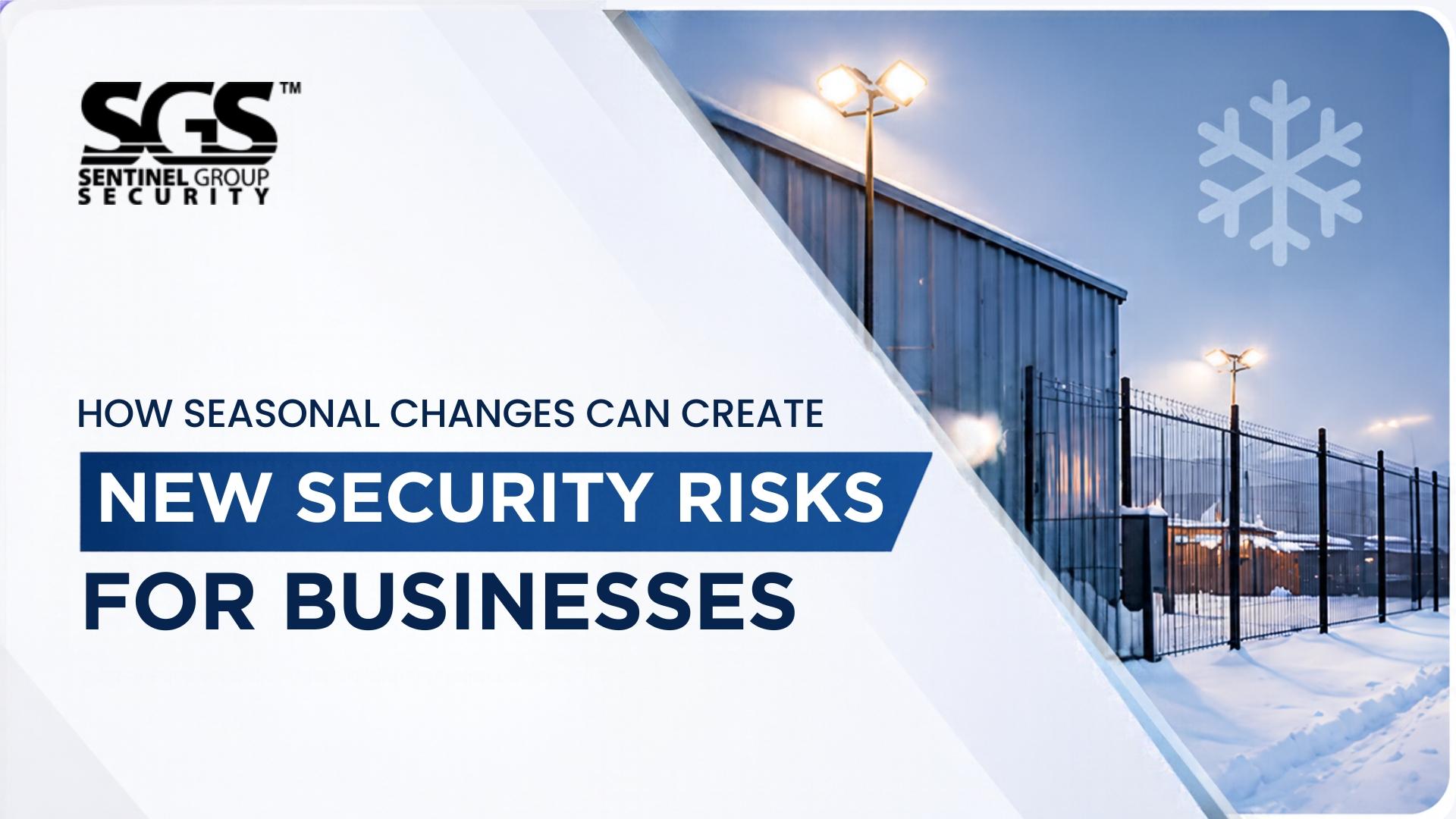
A site does not face exactly the same risks all year. Daylight, weather, staffing levels and working patterns change, and security arrangements need to keep pace.
Darker evenings can expose poorly lit areas. Holiday periods may leave buildings quieter than usual. Storms can damage fencing, gates, and external equipment.
A short seasonal review helps identify these changes before they turn into avoidable incidents. Each season affects a site in a different way.
- Winter: Reduces visibility and brings weather-related damage.
- Summer: Often means annual leave, temporary cover, and quieter premises.
- Spring: Can bring contractors and maintenance work.
- Autumn: The right time to prepare for shorter days and poorer weather.
Most of these changes happen gradually, which is why they can easily be missed during normal day-to-day operations.
Common seasonal issues
- Reduced visibility around premises
- Increased periods when buildings are unoccupied
- Damage to fencing, gates or access points
- Security equipment being affected by severe weather
- Changes to employee and visitor access
- Increased vulnerability during holiday periods
- Valuable assets being left in exposed areas
- Changes to normal business routines
Winter: darkness and severe weather
Winter puts external security under pressure. Darker mornings and evenings make entrances, car parks, loading areas and perimeter boundaries harder to monitor.
Check that lighting still covers the areas people actually use, and that CCTV provides a clear image in low-light conditions. Inspect the physical perimeter after bad weather, too. Strong winds and heavy rain can loosen fencing, damage gates, or affect doors and external equipment. A small defect can quickly become an easy access point.
Key questions to ask:
- Has the weather affected any part of our physical security?
- Are external areas still adequately lit and monitored?
- Have any access points become damaged or vulnerable?
Deal with damage promptly rather than leaving a temporary weakness in place.
Summer: holidays and reduced staffing
Summer creates a different set of problems. Annual leave may leave fewer people on site, and key responsibilities can be passed to temporary cover. Some premises may close completely for part of the season. When a building is quieter, suspicious activity is less likely to be noticed.
Before the holiday period, confirm:
- Who is responsible for security when key employees are away?
- Who responds to alarms or security incidents?
- Are key holding arrangements still appropriate?
- Are valuable assets properly secured?
- Does the premises require additional patrols during quieter periods?
Access arrangements also need attention. Temporary employees, contractors, and alternative keyholders may need short-term access. Make sure permissions are authorised, time-limited, and removed when no longer required.
Autumn: prepare before the clocks change
Autumn is the best time to check that the site is ready for winter. Test external lighting, review CCTV coverage and look again at patrol routes before daylight hours reduce further.
Falling leaves and storms can block sightlines, affect access routes and hide damage around less frequently used parts of the site.
Walk the site as an opportunist might:
- What is now easier to enter, remove or damage?
A dark entrance, damaged fence or obscured camera view may create an opportunity that was not there during summer. Finding it early gives you time to fix it.
Spring: more activity and changing access
Spring often brings maintenance with improvement works and greater use of outdoor areas. That can mean more contractors, deliveries and visitors than usual. A busy site can make it easier for an unauthorised person to blend in, particularly if teams assume somebody else has checked them.
Keep access procedures clear.
Key questions to ask:
- Who is authorised to enter the site?
- Are visitors being properly managed?
- Have temporary access arrangements been reviewed?
- Are contractors aware of relevant security procedures?
Make sure visitors and contractors are signed in, identifiable and limited to the areas they need.
Why seasonal reviews matter
Security arrangements should not be left unchanged for years at a time. Premises, people and working patterns change throughout the year. Weather and daylight add another layer of risk.
A seasonal review does not mean redesigning the whole security operation every few months. It means checking what has changed and whether the current controls still work.
A practical review should include:
- Inspecting physical security measures
- Checking lighting and CCTV coverage
- Reviewing access control arrangements
- Confirming key holding responsibilities
- Reviewing alarm response procedures
- Checking vulnerable external areas
- Identifying changes in staffing or business activity
The purpose is to spot a weakness while it is still straightforward to fix.
How Sentinel Group Security can help
Sentinel Group Security can provide additional support when seasonal changes leave a site quieter, more exposed or harder to manage. This may include security officers, mobile patrols, keyholding and alarm response, all supported by our 24/7 National Operations Centre.
MiSentinel provides patrol verification and reporting, giving clients clearer visibility when their usual teams are not on site. Support can be increased for a specific holiday period or built into a longer-term security plan, depending on the site and risk. The important point is to review the need before the quieter or higher-risk period begins.
Keep your security relevant all year
Seasonal risk is easy to overlook because the changes often feel routine. However, darker evenings, reduced staffing, severe weather and temporary access arrangements can all weaken controls that normally work well.
Build a brief security check into your seasonal planning. Look at what has changed, correct any obvious gaps and confirm who will respond if something happens out of hours. A little preparation can prevent a much more disruptive problem later.
Talk to us about seasonal security support
Contact Sentinel Group Security to review cover for holidays, quieter periods or changing site risks.
- Phone: +44 208 514 6565
- Email: enquiries@sgs-ltd.com