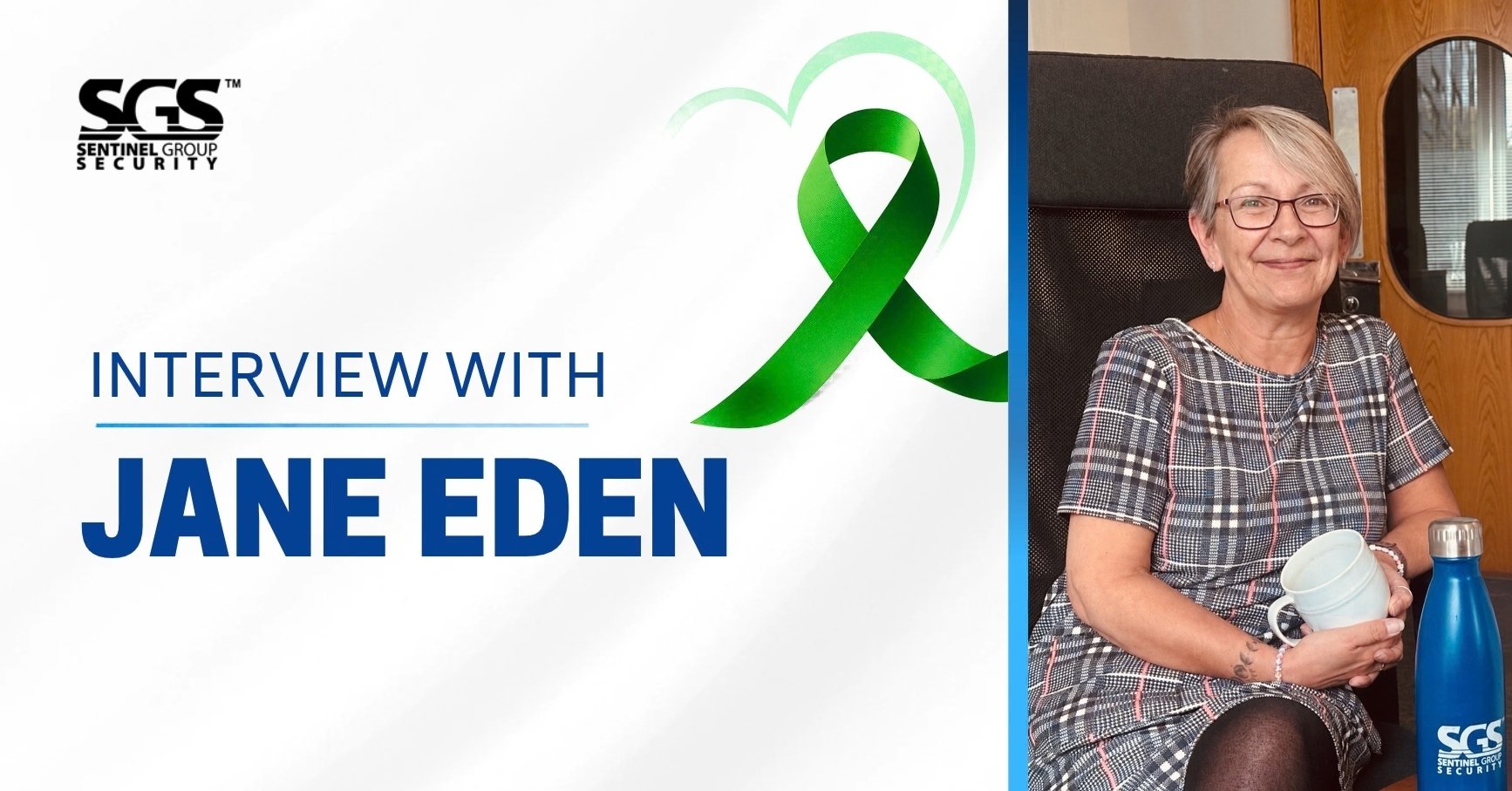
To mark World Mental Health Day on 10 October, we spoke with our Assistant Director of HR & Compliance Jane Eden, about the mental health challenges facing the security industry and what employers can do to provide better support.
Jane, what mental health challenges do you commonly see within the security industry?
Isolation, fatigue and the pressures connected with the role can all affect the mental health of security professionals.
People’s attitudes towards mental health can also differ depending on their background or experiences, and some may not feel comfortable discussing how they are feeling. There is still a lot of stigma.
Security also remains a male-dominated industry, where some men may feel they have to stay strong and silent. They may be struggling inwardly without realising that it is okay to ask for help.
Security work can involve night shifts, lone working and long hours. How can these affect someone’s wellbeing?
Night shifts can have a significant impact on the body’s natural sleep pattern, particularly when they are worked regularly. Your lifestyle and family commitments also play a part. Over time, disrupted sleep can affect both physical and mental health.
Lone working can lead to feelings of isolation. Most of us have some form of interaction during our working day, but some security officers may complete a 12-hour shift without speaking to anyone face to face. Their only contact might be a brief welfare check asking whether everything is okay.
When you combine lone working or night shifts with long hours, it can take a real toll. It also affects life outside work. After completing a 12-hour shift, someone may need eight to ten hours of sleep, leaving very little time or energy for family, friendships and other commitments.
What about the impact of difficult or distressing incidents?
People can react to incidents in very different ways. The seriousness of the incident is not always the best indication of how much it may affect someone.
Even an incident that ends without serious injury could trigger a strong emotional response because of someone’s fears or previous experiences. That is why it is important to check in after any incident, even when it may appear minor to somebody else.
We should never assume that someone is fine simply because the situation had a positive outcome. A proper follow-up conversation can help identify whether they need further support.
You recently completed Suicide First Aid training through the BSIA. What did you take away from it?
One of my biggest takeaways was that we do not need to be mental health experts to make a difference.
Simply listening without judgement, showing empathy and knowing how to direct someone towards the right support can have a huge impact.
The training also helped me understand that asking someone directly whether they are thinking about suicide is not as frightening or harmful as many of us might believe. Having that conversation could be the first step towards helping someone access the support they need.
Why has SGS introduced mental health training for the wider team?
At SGS, we recognise that our people are our greatest asset. Supporting their wellbeing is every bit as important as supporting their professional development.
The training was recommended by a member of our Senior Leadership Team following an event that showed how valuable this knowledge could be.
We want our managers and employees to feel supported at work. Giving our leaders and managers the confidence to recognise when someone may be struggling, start a conversation and signpost them towards suitable support is an important part of creating a people-focused workplace.
SGS has also joined EIDA (Employers initiative on domestic abuse) and developed a domestic abuse policy. Why is this personally important to you?
This is a personal subject for me because of my own experience, and I believe it is vital that employers understand the role they can play.
On average, we spend a large part of our day at work and often build strong relationships with colleagues and managers. However, if nobody recognises the possible signs of domestic abuse, the conversation may never begin and the person may not receive help when they need it most.
By joining the Employers’ Initiative on Domestic Abuse and introducing a domestic abuse policy, SGS is making it clear that anyone experiencing abuse will be treated with compassion, dignity and respect. Most importantly, they will know that support is available.
Finally, what changes would you like to see at SGS and across the wider security industry?
My message to anyone struggling is simple: please speak up. I know that doing so is much harder than it sounds, but you do not have to cope alone.
I would like SGS to have a visible and active open-door culture where employees genuinely feel safe enough to talk. We have made progress, but there is always more we can do.
Across the security industry, I want conversations about mental health, suicidal thoughts, harassment and abuse to become more open and accepted instead of being avoided or swept under the carpet.
We need to empower people to ask for help and make sure that, when they do, they receive the right support and guidance. That is how we begin to break down the stigma.
If you are a charity or VCSE organisation and would like support reviewing or developing your workplace policies around mental health or domestic abuse, our HR team would be happy to help.
Email us at enquiries@sgs-ltd.com